
Integrating Physical Literacy into School Curriculums
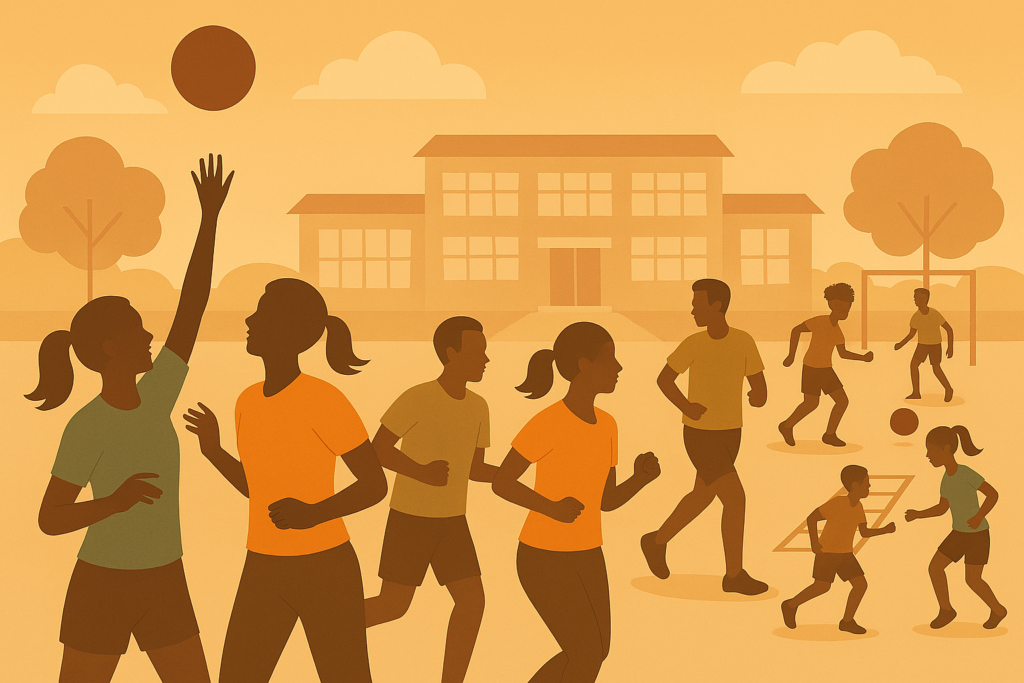
Overview: Following the IPLA (2017) Whiteheadian definition of physical literacy (PL), Shukla et al. (2025) explore a holistic framework within which to encourage long-term health and wellbeing (HWB) among young people aged between 12-17. They propose that physical education (PE) be “a foundational pillar essential for holistic adolescent development” (p. 2668) to challenge the importance given to academic subject learning which tends to dominate in high schools. Thus, the framework encompasses a long-term approach to enhance emotional (affective), physical and cognitive understandings to value and prioritise an active lifestyle.
The problem: the authors note the multiple effects on adolescent experiences in PE. First, some stakeholders might view PE in the ‘traditional’ sense of promoting competitive sports. Understanding the social context of school is important, and might be positively developed through partnership collaboration between policymakers, home and school environments. Second, teachers from across the subject areas may benefit from professional learning to understand PL and the contribution it could make to holistic wellbeing. Pedagogical, inter-disciplinary, and assessment considerations mean developing flexible assessment tools, promoting tracking of individual progress rather than stigmatising against pre-conceived normative benchmarks.
Methodology: a mixed method design, with qualitative and quantitative data collected in parallel invited rural and urban students (400), PE teachers (40) and school administrators (20) to participate in a selection of methods. Tools included a survey (students and PE teachers) and fitness assessments (which seemed to measure physical components, although the authors suggest it measured PL). Qualitative data were gathered during semi-structured interviews (20 PE teachers, 10 administrators) and focus groups for students (5 groups of 8). Please read the full article for details of instruments used to measure and interview participants. The authors also provide limitations and challenges experienced during the research period, such as student resistance, resources, and issues with self-reporting.
The research was conducted over one year. Pedagogical approaches used with students encompassed mini-lectures, project work, physical activities designed to develop movement skills, and multi-media modules on health. Theory was included in an iterative process.
Results: these are presented as statistics showing descriptions of survey and fitness test results, comparisons of PL levels across demographics (school type, gender, and similar), and relationships between PL scores and self-reported health indicators. Qualitative data was thematised around aspects of PL, and insights added to those from quantitative data.
Key takeaways:
- pupils enjoyed participating in physical activities when they understood the relevance to daily life and personal wellbeing (knowledge and understanding)
- celebrating personal incremental improvements boosted motivation
- social, emotional, physical and cognitive wellbeing were enhanced by a targeted holistic programme in PE
- PL-based curricula can serve as an investment in longer-term, preventative healthcare.
This blog was created by Dr Gillian Bartle (IPLA Research Lead) from the full article referenced below. Please feel free to share blogs on physical literacy research by contacting me at: gillian.bartle@physical-literacy.org
Shukla, T. D., Dang, Q-V., Vanamali, S., Al Said, N. and Chaudhary, N., 2025. Integrating Physical Literacy into School Curriculums: A Strategic Approach to Enhancing Long-term Health and Wellbeing in Adolescents. Lex Localis – Journal of local Self-Government, 23(4).