
Physical Education as Wayfinding: Building Agency, Skillfulness and Belonging
By Daniel Lycett
Introduction
I came into teaching by accident.
There was no grand plan. I was a bang-average rugby player who found a huge amount of belonging, friendship and validation through team sport. Teaching was, if I am honest, more expedience than calling. I am now 47 and still often feel as though I am somewhere in the lower trough of the Dunning–Kruger graph: knowing enough to realise how much I still have to learn.
That uncertainty has become useful. It has made me more willing to question long-held assumptions about what physical education is for and how it should be delivered.
At St David’s College, a small independent school in North Wales, that questioning has led us to reimagine PE as something far broader than teaching sports techniques. For us, PE is a psychosocial vehicle. It is a place where young people can move, fail, negotiate, self-regulate, connect and discover what they are capable of.
Challenges
Early in my career, I found comfort in schemes of work, tidy lesson plans and logical progressions. If I followed the process, I assumed good outcomes would follow.
But I began to notice a troubling pattern. Pupils arrived in Year 7 energetic and willing to have a go. By Year 9, some had become disengaged and resistant. Those who remained involved often had strong sporting backgrounds and supportive families. Others were being left behind.
One Year 9 group crystallised this for me. The class had split into two camps: a confident football group and another group who felt disconnected from both the activity and their peers. Trying to force everyone through the same experience was not working.
The problem was not that the pupils lacked motivation. The problem was that our structures often failed to meet the needs of the young people in front of us.
Actions Taken
The first change was simple: I started looking for ways to share control.
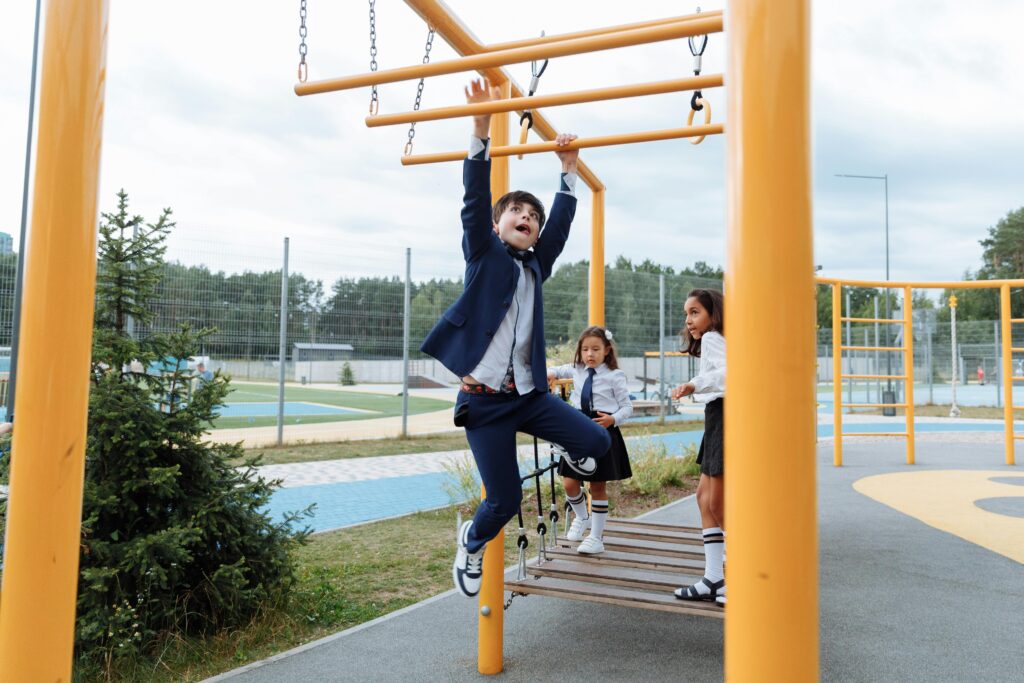
We introduced student ambassadors who helped design lunchtime and after-school activities. In lessons, we gradually moved away from technique-heavy instruction and towards environments that encouraged exploration and decision-making.
Our curriculum now consists of three weekly experiences:
- Donor – unfamiliar games and activities that develop broad concepts of skillfulness.
• Functional Movement – playful movement experiences such as climbing, balancing and grappling.
• Focus – a codified sport such as rugby, cricket, athletics or hockey.
A key distinction for us is between technique and skillfulness. Technique is isolated movement execution. Skillfulness is the ability to adapt movement and decision-making to solve problems in the moment.
Across all lessons, several structures remain consistent:
- Levels – pupils move from guided challenges to designing their own rules and scoring systems.
• Pauses – pupils can stop an activity, discuss what is not working and suggest adaptations.
• Right to Disengage – pupils can step away to regulate and return when ready.
• Affirmation – feedback guides attention rather than simply praising or correcting.
My role has shifted from being the central controller to what I describe as “keeping the balloon in the air.” I design the environment, observe carefully and offer small nudges when needed.
Results
The most significant outcomes are often not technical.
Pupils learn to self-organise, negotiate, solve problems and regulate their emotions. They become more comfortable with uncertainty and more willing to take ownership of their learning.
We now have sixth form students who have experienced this approach since Year 7. When reflecting on their own coaching, many identify adaptability as their greatest strength.
The approach has also stood up to external scrutiny. During inspection, observers noted high levels of engagement and clear progress. As a very small school, we regularly compete successfully against much larger schools. More importantly, pupils leave lessons wanting to do more, not less.
Parents often tell us that their children talk positively about PE and feel that they have a genuine voice in what happens.
Conclusion
This work has been shaped by many influences: Self-Determination Theory, Ecological Dynamics, Motivational Interviewing, trauma-informed practice, and generous conversations with coaches and educators such as Russell Earnshaw, Marianne Davies and many others.
If there is one central idea, it is this: work with the young people in front of you, not with the ones you wish you had.
I do not believe we “give” pupils agency. They already possess it. Our job is to create environments where they feel safe, challenged and connected enough to use it.
Physical education should help young people become more physically capable, more socially connected and more confident in navigating uncertainty.
In other words, PE should help them find their way.